

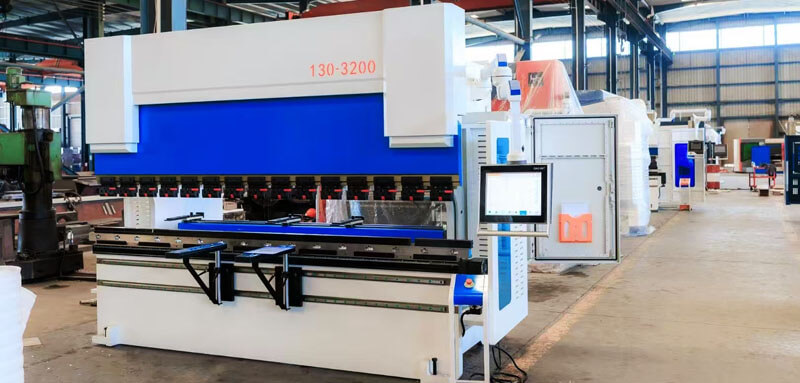
How to Choose a Press Brake for Your Production
How Do You Choose the Right Press Brake?
When choosing a press brake for production sheet metal work, start with the material type and thickness, maximum bending length, required tonnage, production volume and bending accuracy. You should then select the machine type, CNC control, backgauge configuration and tooling based on the parts you plan to produce.
A press brake that is suitable for prototype work may not be the best choice for continuous production. The right machine should be selected according to your actual production requirements rather than tonnage alone.
| What to Evaluate | Why It Matters |
|---|---|
| Material Type | Mild steel, stainless steel and aluminum require different bending force |
| Material Thickness | Determines the required press brake tonnage |
| Bending Length | Determines the required machine working length |
| Part Complexity | Affects tooling, throat depth, backgauge and CNC requirements |
| Production Volume | Determines the need for speed, automation and fast setup |
| Accuracy Requirements | Affects CNC control, backgauge and crowning configuration |
| Tooling | Determines whether standard or custom punches and dies are required |
| Factory Space | Affects machine size, installation and material handling |
| Budget | Determines the balance between initial investment and required production capability |
Understanding Press Brakes
A press brake is a metal forming machine used to bend sheet metal and plate into desired shapes. It applies controlled force to the workpiece, creating precise and repeatable bends. Press brakes are essential tools in a wide range of industries, from automotive and aerospace to construction and electronics.
Choose the Right Type of Press Brake:
For most industrial sheet metal applications, hydraulic press brakes are suitable when high tonnage and versatility are required. Servo-electric machines are better suited to fast, precise and energy-efficient production, while hybrid press brakes can provide a balance between performance and energy consumption.
| Machine Type | Best Suited For |
|---|---|
| Hydraulic | High tonnage, heavy-duty and versatile production |
| Servo-Electric | High-speed, precise and energy-efficient production |
| Hybrid | A balance of hydraulic power and energy efficiency |
| Mechanical | High-volume applications with relatively simple bending requirements |
Press Brakes Applications
-
Hydraulic Press Brakes:Hydraulic press brakes are versatile and offer high precision, making them ideal for a wide range of bending applications. They provide adjustable stroke length and force, allowing for greater control over the bending process.
-
Best For: General-purpose sheet metal bending, offering versatility and high precision.
-
Applications: Automotive (chassis components), Construction (structural steel), HVAC (ductwork).
-
-
Electric Press Brakes:Electric press brakes are energy-efficient and require minimal maintenance, making them a cost-effective choice for many businesses. They offer precise control and are well-suited for applications requiring high accuracy.
-
Best For:Energy efficient and low-maintenance operations requiring precise control.
-
-
- Applications: Electronics (enclosures), Medical Devices (surgical instruments), Aerospace (small components).
- Mechanical Press Brakes:mechanical press brakes are suitable for repetitive, high-volume sheet metal bending operations,and they typically offer lower precision compared to other types.
-
Best For: High-speed, simple bends in mass production environments.
- Applications: Appliance Manufacturing (brackets), Automotive (stamping), Hardware (fasteners).
-
- Hybrid Press Brakes:Hybrid press brakes combine the benefits of both hydraulic and electric systems, offering a balance of speed, precision, and energy efficiency. They are often used in demanding applications where high performance is critical.
- Best For: Combining speed, precision, and energy efficiency for demanding applications.
- Applications: Aerospace (complex structural parts), High-Precision Fabrication (custom components).
Key Factors to Consider When Choosing a Press Brake
Choosing the right press brake requires careful consideration of several factors:
1. Material Type and Thickness:
Start with the materials you bend most often. The combination of material type, thickness and bending length determines the tonnage and machine capacity required.
- Different materials require different bending forces. Steel, aluminum, and stainless steel each have unique properties that affect the press brake tonnage calculation.
- Use a tonnage chart to determine the appropriate press brake capacity based on the material type, thickness, and bend length.
2. Bend Length and Complexity:
Choose a press brake with sufficient bending length for your largest workpiece, while allowing additional capacity for positioning and tooling requirements. Complex parts may also require specialized punches, dies or additional machine clearance.
- The bend length determines the required machine size and capacity.
- Complex bends may require specialized press brake tooling, such as gooseneck punches or radius dies.
- Consider the complexity of your parts and choose a press brake with the appropriate tooling options.
3. Production Volume:
Production volume determines how much you should invest in CNC controls, backgauge speed, quick clamping and automation. A machine used for prototype or small-batch production may prioritize flexibility, while continuous production requires faster setup and repeatable positioning.
For high-volume production, consider:
- Fast and repeatable CNC backgauging
- Programmable bending sequences
- Quick-clamping or segmented tooling for faster setup
- Servo-electric or other high-speed configurations where appropriate
- Automation for repetitive loading and unloading
What Are the Best Press Brake Solutions for High-Volume Production?
For high-volume production, the best press brake solution depends on part complexity, production volume, material thickness and how often jobs change. In general, a CNC press brake with fast backgauging, quick tooling setup and programmable bending sequences is suitable for high-volume sheet metal production. For highly repetitive parts, servo-electric or automated press brake systems can further improve cycle time and reduce manual handling.
| High-Volume Production Requirement | Recommended Press Brake Solution | Why |
| Repetitive sheet metal parts | CNC press brake | Programmable bending sequences and repeatable positioning |
| High-speed production of lighter parts | Servo-electric press brake | Fast cycling and efficient operation |
| Frequent tooling changes | CNC press brake + quick clamping | Reduces setup and changeover time |
| Complex parts with multiple bends | Multi-axis CNC press brake | Controls multiple positioning axes and bending sequences |
| Large batches with consistent parts | CNC press brake + automation | Reduces manual handling and improves production consistency |
| Automated loading and unloading | Robotic press brake cell | Reduces operator handling for repetitive production |
For most high-volume sheet metal workshops, the priority should be repeatability, setup time, cycle time and material handling, rather than simply choosing the press brake with the highest tonnage.
4. Precision and Accuracy:
- The required level of precision and accuracy depends on the industry and application.
- Look for press brakes with advanced backgauge systems and CNC controls to ensure accurate and repeatable bends.
- Consider the tolerance requirements for your parts and choose a press brake that can meet those requirements.
5. Space and Power Requirements:
- Consider the machine footprint and installation requirements.
- Ensure your facility has adequate electrical and hydraulic power to support the press brake.
- Factor in the cost of installation and any necessary upgrades to your facility.
What Determines the Budget for a New CNC Hydraulic Press Brake?
The budget for a new CNC hydraulic press brake depends primarily on the machine’s tonnage, bending length, CNC configuration and the level of automation required. There is no single standard price because a machine designed for light sheet metal work may require a very different configuration from one used for heavy industrial fabrication.
| Configuration | Effect on Budget |
|---|---|
| Tonnage | Higher tonnage generally requires a larger and more powerful machine |
| Bending Length | Longer bending lengths increase machine size and structural requirements |
| CNC Controller | Controller functions and programming capability affect configuration cost |
| CNC Axes | Additional backgauge axes provide more positioning flexibility |
| Crowning System | Required for applications with higher bending accuracy |
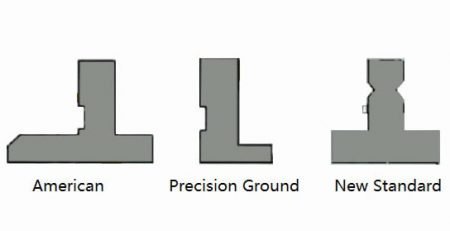
| Tooling | Standard tooling and custom tooling have different costs |
| Quick Clamping | Can reduce setup time for frequent tooling changes |
| Automation | Robot cells or automatic material handling increase the overall investment |
| Installation & Support | Shipping, commissioning and training should also be considered |
For a realistic budget, buyers should first define the maximum material thickness, bending length, material type, required production volume and accuracy requirements. These parameters make it possible to configure a press brake that matches both the production needs and the available investment.
Press Brake Features That Can Improve Production Efficiency
-
CNC Control Systems:
-
Benefits: Precise, repeatable bends, reduced setup time, and increased productivity.
-
Popular Brands: Delem, Cybelec, ESA.
-
-
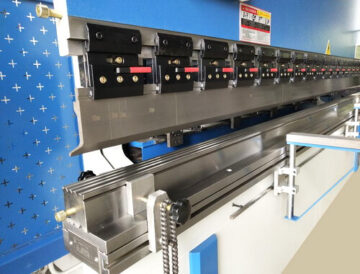
Automatic Tool Changers(Quick Clamp):
-
- Benefits: Reduces setup time, increases productivity, and minimizes the risk of errors.
- Quick Clamp-Automatic Tool
-
Multi-Axis Backgauge :
-
Benefits: Ensures accurate positioning for complex bends, reduces scrap, and improves bend quality.
-
-
Crowning system :
-
Benefits: The compensations for the deflection can help achieve perfect bending results with equal and consistent angles along the length of the bend.
-
-
Press Brake Safety System:
-
Benefits: Protects operators from injury and ensures a safe working environment.
-
Essential Features: Light curtains, two-hand operation, emergency stops.
-
How to Choose the Right Supplier
-
Experience and Reputation:
-
Look for manufacturers with a proven track record of producing high-quality press brakes.
-
Check customer reviews and case studies to assess their reputation.
-
-
Customization Options:
-
Ensure the supplier can tailor machines to your specific needs and requirements.
-
Look for suppliers that offer a wide range of press brake tooling options and accessories.
-
-
After-Sales Support:
-
Choose a supplier that provides comprehensive after-sales support, including technical assistance, spare parts, and training.
-
Ensure they have a responsive and knowledgeable support team.
-
-
Certifications:
-
Verify that the supplier has relevant certifications, such as ISO and CE, to ensure their products meet industry standards.
-
-
Consider buying a used press brake buying guide to help you make the right choice.
Which Press Brake Configuration Is Suitable for Your Production?
High-volume small parts → Servo-electric press brake
Frequent part changes → CNC press brake with quick clamping
Complex bending profiles → Multi-axis CNC backgauge + suitable tooling
| Production Requirement | Recommended Configuration |
|---|---|
| Heavy-duty thick plate bending | High-tonnage CNC hydraulic press brake |
| General sheet metal fabrication | CNC hydraulic press brake with standard multi-axis backgauge |
| High-volume small parts | Servo-electric press brake |
| Frequent part changes | CNC press brake with quick clamping |
| Complex bending profiles | Multi-axis CNC backgauge + suitable tooling |
| High accuracy over long bending lengths | CNC press brake with crowning system |
Conclusion
Choosing the right press brake is a critical decision that can significantly impact your metal fabrication operations. By carefully considering the factors outlined in this guide and partnering with a reputable supplier like JSTMT, you can optimize your bending process, improve efficiency, and achieve consistently high-quality results.
Need a Press Brake Configuration and Budget Estimate?
Send us your material thickness, bending length and production requirements. JSTMT can recommend a suitable press brake configuration and provide a quotation based on your application.
[Request a Configuration & Quote]

Leave a Reply