

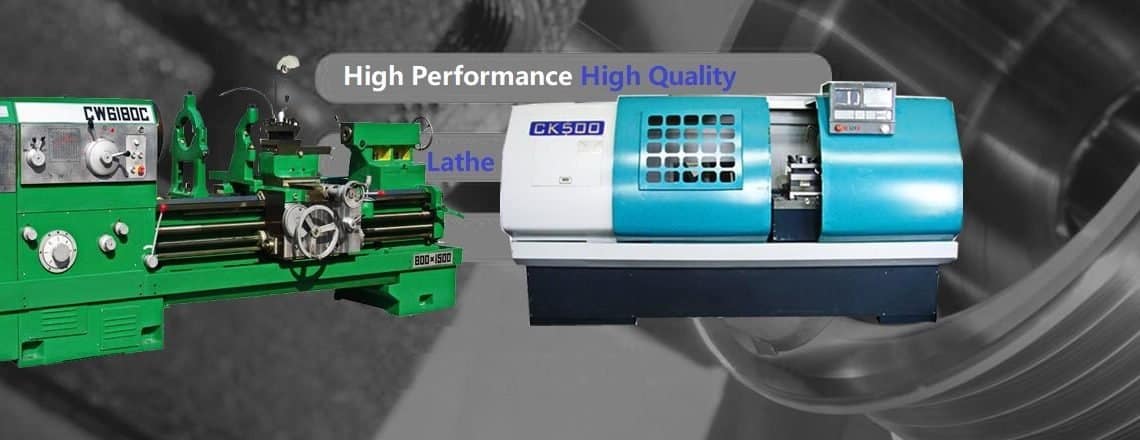
Metal Lathe Machine Buying Guide
The Ultimate Metal Lathe Machine (MC) Buying Guide: 2026, Precision & Performance Standards
What is Lathe machine? In the world of metalworking and precision engineering, the metal lathe machine is a versatile manufacturing tool that rotates a workpiece on an axis against a stationary cutting tool to remove material, creating precise cylindrical, conical, or shaped parts. Whether you are performing heavy-duty industrial turning or high-precision toolroom work, selecting the correct Lathe MC determines the quality of your output and the efficiency of your operations.
How does a metal lathe machine work?
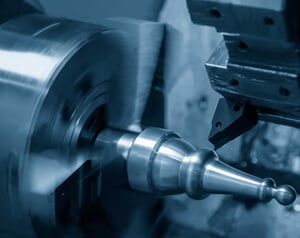
As a form of subtractive manufacturing, it utilizes a precision spindle to rotate the workpiece at high speeds, employing a stationary, hardened tool to feed against the rotating metal. As the tool of superior hardness (such as a carbide insert) makes contact, it utilizes shear force to convert the metal into chips, effectively transforming rough raw materials into high-precision shafts or disc-shaped components。
What are the main parts of a metal lathe machine?
The machine consists of five main parts: the headstock, tailstock, bed, carriage, and lead screw. Each component plays a vital role in ensuring smooth and precise machining processes, making lathes essential in industries like manufacturing, automotive, and engineering.

This comprehensive guide analyzes the essential factors you must evaluate when looking for a lathe machine to ensure your investment stands the test of time and technical demand.
1. The structure Rigidity: — Why Bed Material Defines Longevity
The foundation of any Lathe MC is its bed. While low-end manufacturers use HT200 or even recycled scrap iron to cut costs, JSTMT insists on HT300 High-Strength Inoculated Cast Iron.
The Technical Logic:
HT300 features a finer, more dense graphite flake structure. This isn’t just a material upgrade; it’s a physics-based necessity.
- Vibration Damping: HT300 provides approximately 25% higher internal damping capacity compared to HT200.
- Interrupted Cutting: When performing interrupted cuts or working with hardened alloys, the HT300 bed absorbs high-frequency harmonics that would otherwise cause “chatter.”
Without this structural rigidity, even the best spindle will produce poor surface finishes and accelerate tool insert wear.
2 .The Heart — Spindle Precision & Global Compatibility (A2-8 Standards)
The spindle is where the “machining” happens, and its interface defines your workshop’s flexibility. A professional metal lathe machine must adhere to international mounting standards, such as the A2-8 spindle nose.
Precision Control:
A high-performance Lathe MC must maintain a Spindle TIR (Total Indicator Reading) of nearly zero. We ensure that our spindles are forged from 42CrMo alloy steel, multi-stage heat-treated, and precision-ground. By choosing an A2-8 or similar standard, you ensure that your metal lathe machine is compatible with premium global chuck brands and specialized fixturing, reducing your downtime when switching setups.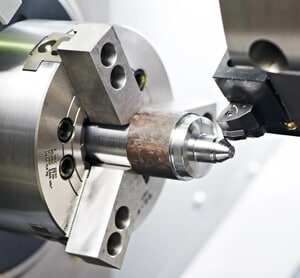
3: Solving the Operator’s Pain — Tailstock & Chip Management
Two of the most common frustrations in a turning center are tailstock misalignment and heat-soak from chip accumulation.
The Dual-Guide Engineering Logic
In long-shaft machining, Tailstock Realignment is often the most time-consuming task. Conventional single-rail designs often suffer from lateral “walk” after frequent locking.
- The JSTMT Solution: Our Lathe MC units utilize a Dual-Rectangular Guide design. By increasing the contact surface area and employing precision hand-scraping, we reduce lateral oscillation. Even after thousands of movements, the concentricity between the tailstock and spindle remains stable at<0.015mm
Chip Management: The Stealth Killer of Accuracy
Many ignore the thermal impact of “Hot Chips.” When glowing metal chips pile up on the bed, they transfer heat directly into the ways, causing microscopic thermal expansion that alters your dimensions.
- Large-Angle Slope Design: JSTMT beds feature an internal high-angle slope. Combined with high-pressure coolant flow, chips are immediately flushed into the collection tray. This maintains the machine’s thermal stability and keeps the operator focused on production rather than cleaning.
4. How to Check Lathe Spindle Precision in 3 Steps:
-
Step 1: Thermal Stabilization (The 20-Minute Rule)
Before measuring, you must account for thermal expansion. Run the spindle at 50% of its maximum RPM for at least 20 minutes. This allows the P4-grade bearings and lubrication to reach a steady operating temperature, ensuring your readings reflect real-world production conditions.
-
Step 2: Setup High-Sensitivity Metrology
Mount a high-sensitivity dial test indicator (with a resolution of 0.001mm) onto the machine bed or a magnetic base. Place the indicator tip against the spindle nose or the internal taper. Precision measurement requires a clean, oil-free surface to prevent “false” deviations.
-
Step 3: Measure Total Indicator Runout (TIR)
Manually rotate the spindle through a full 360° rotation.The JSTMT Benchmark: A professional-grade metal Lathe Machine should demonstrate a TIR of less than 0.005mm. If the deviation exceeds this, it indicates potential bearing wear or gear misalignment, which will compromise your surface finish .
5: Total Cost of Ownership (TCO) vs. Initial Price
A “cheap” metal lathe machine often becomes the most expensive asset . Choosing a Lathe MC built to higher structural standards—like those at JSTMT—drastically reduces the following costs:
- Scrap Rates: Inconsistent precision leads to wasted raw materials.
- Maintenance: Soft bed ways require frequent realignment.
- Resale Value: A brand known for using HT300 and A2-8 standards retains significantly higher value on the secondary market.
Conclusion: The JSTMT Manufacturing Standard
At JSTMT, we don’t just assemble parts; we engineer solutions. As a specialist in both sheet metal machinery and precision lathes, we have supplied equipment to demanding workshops in Vietnam, Chile, and Romania.
Our C6246 and 6150 series are built strictly to these engineering standards—utilizing HT300 castings, dual-guide tailstocks, and superior chip evacuation systems. When you buy a JSTMT Lathe MC, you are investing in a machine designed to be as accurate in year ten as it was on day one.
Ready to upgrade your turning capacity?
Explore our full range of professional metal Lathe Machines here or contact our engineering team for a custom configuration.



Leave a Reply