

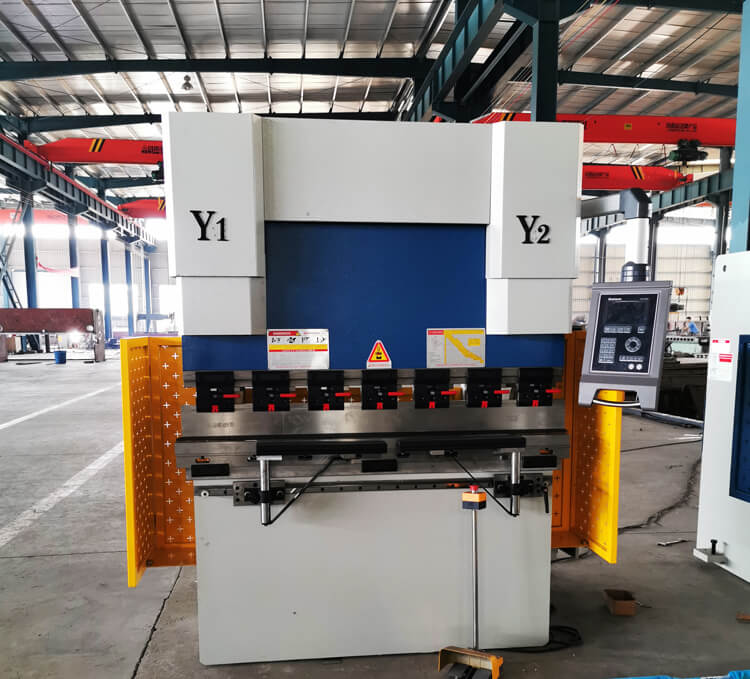
Hydraulic vs Electric vs Hybrid Press Brakes: Which Is Right for Your Shop?
Which Press Brake Should You Choose for Your Production?
Choose a hydraulic press brake when your shop handles thick materials, high tonnage, long bending lengths or a wide range of jobs. Choose a servo-electric press brake when high-speed production, energy efficiency and precision for lighter parts are the priorities. Choose a hybrid press brake when you need a balance between hydraulic bending force, production efficiency and energy consumption.
Hydraulic vs Electric vs Hybrid: Which One Fits Your Shop?
Press brake machines are mainly classified according to their drive systems. The drive system determines the tonnage, speed, and energy efficiency of the machine.
| Production Requirement | Recommended Press Brake | Why |
|---|---|---|
| Thick plate / heavy-duty bending | Hydraulic | High tonnage and versatile bending capacity |
| Long bending lengths | Hydraulic | Suitable for large workpieces and high-force applications |
| Mixed production with different materials | Hydraulic | Broad application range |
| High-speed production of lighter parts | Servo-Electric | Fast cycles and efficient power use |
| Small and medium precision parts | Servo-Electric | High positioning and repeatability |
| High-volume production | Servo-Electric | Fast setup and reduced idle energy use |
| Need both hydraulic force and efficiency | Hybrid | Combines hydraulic power transmission with servo-driven operation |
| Production where energy efficiency matters | Electric / Hybrid | Reduced energy use compared with conventional hydraulic systems |
Press Brake Machine Types:
1. Hydraulic Press Brakes:
- The most common industrial standard. They use dual hydraulic cylinders to move the ram.
- Best suited for: Heavy-plate fabrication, high-tonnage requirements (>150 tons), and long-bend lengths.
- The Advantage: They offer the best “tonnage-to-cost” ratio. If you are bending 10mm stainless steel from North
2. Electric (Servo) Press Brakes:
- Driven by high-torque servo motors and ball screws or belts.
- Best suited for: High-speed, high-precision production of small to medium parts (<150 tons).
- The Advantage: Unmatched Speed. Servo-electric brakes can be up to 30% faster in cycle times because the ram accelerates and decelerates instantly.
3. Hybrid Press Brakes:
- A “Best of Both Worlds” system using a servo motor to drive a small hydraulic pump.
- Best for: High tonnage combined with the precision of an electric machine. It eliminates the constant noise and heat of traditional hydraulics.
In this article, we will focus more on the standard electric brake vs hydraulic press brake.
| Type | Tonnage Range | Precision | Energy Cost | Ideal Material |
| Hydraulic | 40 – 1000+ Tons | High | Medium/High | Heavy Steel/Large Plates |
| Electric | 20 – 150 Tons | Ultra-High | Very Low | Thin Stainless/Aluminum |
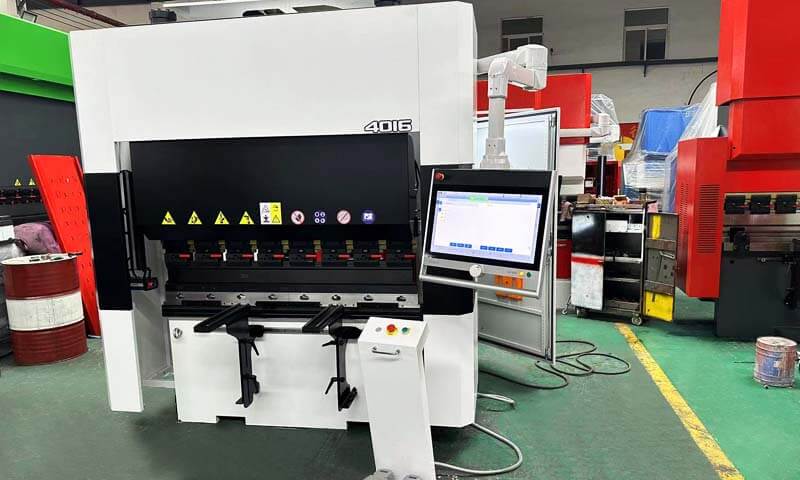
The Core Difference: Muscle vs. Motor
The main difference between hydraulic and electric press brakes is how the ram is driven.
Hydraulic press brakes use hydraulic cylinders(oil Pressure)to deliver high bending force and are suited to heavy-duty work. Electric press brakes use servo motors for faster, more precise and energy-efficient bending, making them well suited to lighter and high-volume production.
- Hydraulic Press Brakes use pumps and cylinders to push the ram down. They rely on oil pressure.
- Electric Press Brakes use servo motors to drive ball screws or belts. They rely on direct electrical mechanical force.
The Difference: Hydraulic Vs Electric Press Brakes
1. Speed and Cycle Time
The primary advantage of an electric press brake is its dynamic speed. Because it relies on servo motors, it bypasses the “ramp-up” time required for hydraulic valves to open and oil to flow.
- Electric Advantage: For small, intricate parts (brackets, enclosures), electric brakes win on cycle time. Servo motors offer instant acceleration and deceleration, allowing for ultra-fast “hit rates.”
- Hydraulic Consistency: When handling massive sheets or high-strength plate, a slower, controlled approach is often safer. Hydraulic machines provide a steady “flow” that reduces the risk of material whipping or operator error on large workpieces.
2. Tonnage and Capacity
While electric technology is advancing, hydraulic systems remain the “King of Tonnage.”
- The 100-Ton Threshold: Generally, Electric Press Brakes are the superior choice for applications under 100 tons. Beyond 150–200 tons, the mechanical components required for electric drives (like massive ball screws or belts) become prohibitively expensive.
- The Heavyweight Champion: For structural steel, heavy plates, or long tandem lines, Hydraulic Press Brakes have no limit. If you need a standard Sheet Metal Press Brake or massive tandem line for bending light poles with 1,000 tons of force, hydraulic cylinders are the most cost-effective way to deliver that pressure reliably.
- Tonnage is an important selection factor, but it should not be used as the only dividing line between electric and hydraulic press brakes. The material, bending length, production volume, part size, cycle time and required accuracy also affect the decision.
3. Maintenance and The “Oil Factor”
- The “Green” Machine: Electric press brakes are essentially oil-free. There are no seals to leak, no filters to change, and no environmental disposal fees. This makes them perfect for clean-room environments or shops focused on sustainability.
- The Traditional Workhorse: Hydraulic oil maintenance is mandatory; as oil temperature fluctuates, so can your bending accuracy unless you have a high-end Automatic Crowing System to compensate for thermal expansion.
4. Cost: Upfront vs. Long Term
This is usually the deciding factor for most workshop managers.
Feature Hydraulic Press Brake Electric Press Brake
Initial Cost Lower ( buy More tonnage ) Higher (Premium for servo-technology)
Energy Consumption Continuous (Pump idles ) On-Demand (Only uses power )
Electricity Savings Baseline Up to 50% Reduction
Precision High Ultra-High (0.001mm Repeatability)
Comparison Chart: Hydraulic vs Electric Press Brakes Specs
| Feature | Hydraulic Press Brake | Electric Press Brake |
|---|---|---|
| Best Application | Heavy plate, long sheets, high-tonnage and versatile production | Thin/medium sheet metal, small complex parts and high-speed production |
| Tonnage Range | 40T–1000T+; suitable for high-force bending applications | 20T–150T; generally suited to lower-tonnage applications |
| Bending Speed | Suitable for heavy-duty bending and a wide range of production jobs | Fast cycle times, especially for repetitive small-part production |
| Energy Efficiency | Lower; conventional hydraulic systems may consume power while the pump is running | High; servo motors can use power primarily during bending |
| Accuracy & Repeatability | High accuracy with CNC control and proper backgauge configuration | High positioning accuracy and repeatability, particularly for precision production |
| Maintenance | Higher; hydraulic oil, filters, seals, valves and pumps require periodic maintenance | Generally lower; fewer hydraulic components and routine mechanical/electrical maintenance |
| Initial Investment | Generally lower for comparable high-tonnage capacity | Generally higher, especially for advanced servo-electric configurations |
| Large Workpieces | Excellent for long bending lengths and heavy workpieces | More limited by available machine tonnage and working length |
| Production Flexibility | Excellent for mixed materials, thicknesses and different bending jobs | Best suited to consistent, repetitive production within the machine’s capacity |
| Energy Saving Priority | Less suitable when minimizing idle energy consumption is a major priority | Strong choice when energy efficiency is an important production goal |
In general, hydraulic press brakes are the more versatile choice for heavy-duty, high-tonnage and mixed-production applications, while electric press brakes are well suited to fast, precise and energy-efficient production of lighter parts
(Not sure if you need manual or automated controls? Check our guide on NC vs. CNC Press Brakes to understand the controller differences.)
When Should You Choose a Hybrid Press Brake?
A hybrid press brake is worth considering when your production requires more capability than a typical servo-electric machine but you also want better energy efficiency and dynamic control than a conventional hydraulic system. It can be a suitable middle ground for manufacturers balancing bending force, productivity and operating costs.
Servo-electric machines are generally most attractive for lighter and high-volume production, while hydraulic systems remain more practical for higher-force applications and larger workpieces.For a complete press brake buying checklist, see our [How to Choose a Press Brake] guide.
How Does Cost Affect the Choice?
Hydraulic press brakes generally have a lower initial investment for comparable bending capacity, while servo-electric and some hybrid systems can reduce energy consumption and maintenance requirements. The better financial choice depends on machine utilization, production volume, electricity costs and the price difference between configurations.
Conclusion: How to Make the Final Choice
For heavy-duty, high-tonnage or long-bend production, choose hydraulic. For high-speed, energy-efficient production of lighter parts, choose servo-electric. For a balance of hydraulic force and energy efficiency, consider hybrid.
The right press brake depends on the type of parts your shop produces, rather than simply choosing the most powerful or most energy-efficient machine.
Choose a Hydraulic Press Brake if:
- You bend thick or high-strength materials.
- You need high tonnage.
- You work with long or large workpieces.
- Your shop handles a wide range of bending jobs.
- Versatility and initial machine cost are important.
- You primarily bend thick materials or heavy plates, need maximum tonnage, prioritize lower upfront cost, and can manage maintenance. A high quality machine requires high press brake tooling.
Choose a Servo-Electric Press Brake if:
- You mainly produce thin or medium-gauge sheet metal parts.
- Production speed is a priority.
- You need high repeatability for small or medium parts.
- Energy efficiency is important.
- Your production involves frequent short-cycle bending.
Choose a Hybrid Press Brake if:
- You need a balance between bending force and energy efficiency.
- Your production requires more capability than a typical servo-electric machine.
- You want servo-driven efficiency while retaining hydraulic power transmission.
- You are looking for a middle-ground configuration for demanding production.
If you are unsure which configuration fits your shop, provide your typical material, thickness, maximum bending length, production volume and required accuracy. JSTMT can recommend a suitable hydraulic, servo-electric or hybrid press brake configuration based on your actual production requirements.
Contact JSTMT today for a free ROI calculation or browse our full range of CNC Sheet Metal Press Brakes to see the specs for yourself.
- Choose a hydraulic press brake if your shop handles thick plate, long sheets, high-tonnage bending or a wide variety of production jobs.
- Choose an electric press brake if your production focuses on lighter sheet metal parts, fast cycle times, high repeatability and energy efficiency.
- Consider a hybrid press brake if you need a balance between high bending capability, servo-driven efficiency and production flexibility.
In terms of upfront purchase price, hydraulic press brakes are cheaper, typically costing 20% to 30% less than electric models of the same tonnage. However, electric press brakes are cheaper to operate in the long run. They can reduce energy costs by up to 50% and virtually eliminate the expenses associated with oil, filters, and seal replacements.
Both machines are designed for a long service life, but electric press brakes often have higher “uptime” longevity. Because they have fewer wearing parts—specifically, no hydraulic valves, seals, or pumps that degrade over time—they suffer from less mechanical wear. Hydraulic machines are extremely durable for heavy-duty work, but require consistent component replacement to maintain their lifespan.


Leave a Reply