

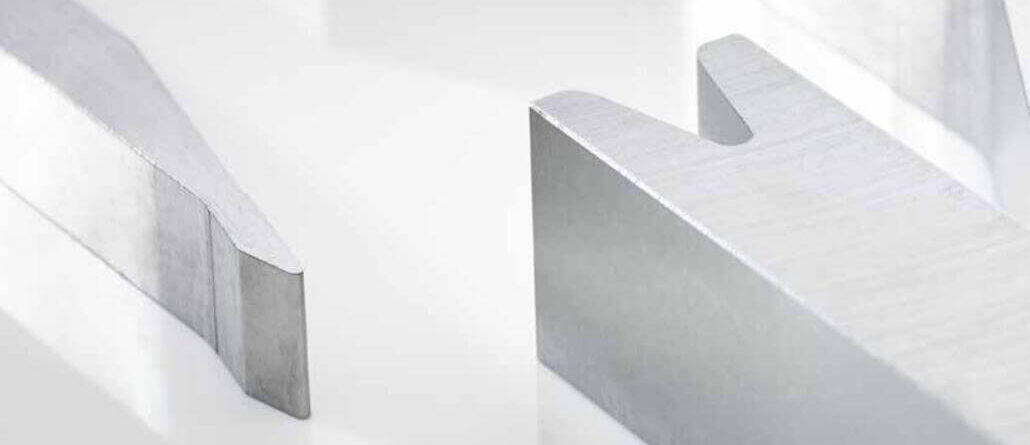
How to Calculate the V Die Opening for Different Sheet Metal Thicknesses
The Introduction
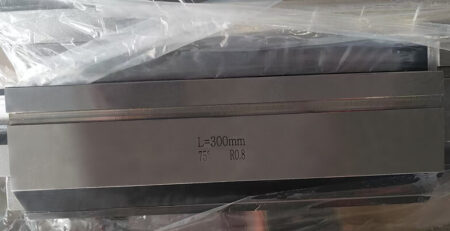
To get the perfect bend, calculating the correct V die opening for die block is one of the most critical steps in sheet metal bending based on your sheet thickness. Get it right, and you’ll achieve precise angles and a perfect internal radius. However, having high-precision press brake tooling is just as important as the V die opening.
What Is V Die Opening and Why It Matters
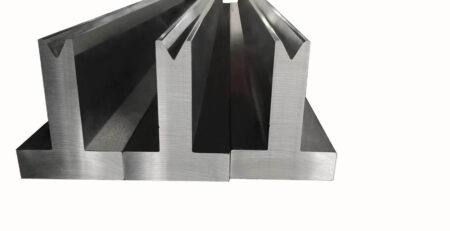
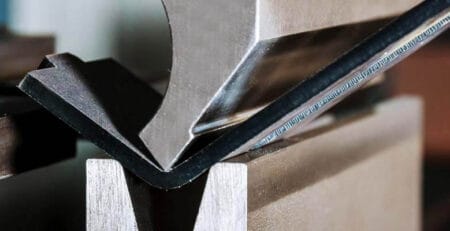
A V Die opening is the width of the V-shaped groove in a press brake bottom die. It dictates the final inside bend radius of the sheet metal, controls the required bending tonnage, determines minimum flange lengths, and prevents structural cracking or tool damage during fabrication.
Choosing the correct V die opening is the single most important decision an operator makes. It affects your bend radius, the tonnage required, and the minimum flange length you can form.
This article explains how to calculate the correct V die opening for press brake bending based on material type, sheet thickness, and bending method. It includes practical formulas, V opening charts, and tips to avoid common mistakes such as excessive tonnage, cracks, and poor angle accuracy.
1. The Golden Standard: The “Rule of 8”
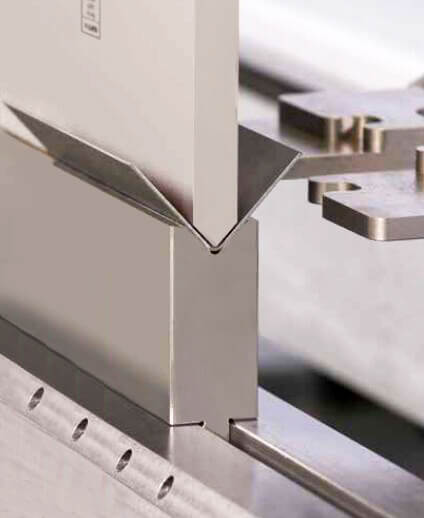
For standard 90° bends using the V=8xT rule, our Standard Press Brake Tooling is the most cost-effective choice.”.This states that for standard air bending of mild steel, the V-die opening should be 8 times the material thickness .
V Opening vs Sheet Thickness: General Rules
The Formula:
V Die Opening = 8 x Material Thickness
Example:
If you are bending a 2mm thick sheet of mild steel:
Calculation: 2mmx8= 16mm
This ratio provides the perfect balance between bending force and angle accuracy. It naturally creates an inside radius equal to about 1/6th of the V-opening, which is ideal for structural strength.
When to vary the multiplier:
While “8x” is the standard for mid-range thicknesses, operators often adjust the ratio based on the thickness of the sheet:
- Thin Gauge (< 3mm): Use 6xT -8xT
- Thin Gauge ( 3-10mm): Use 8xT
- Heavy Plate (> 10mm): Use 10xT-12xT
2. V Dies : Stainless vs. Aluminum Material
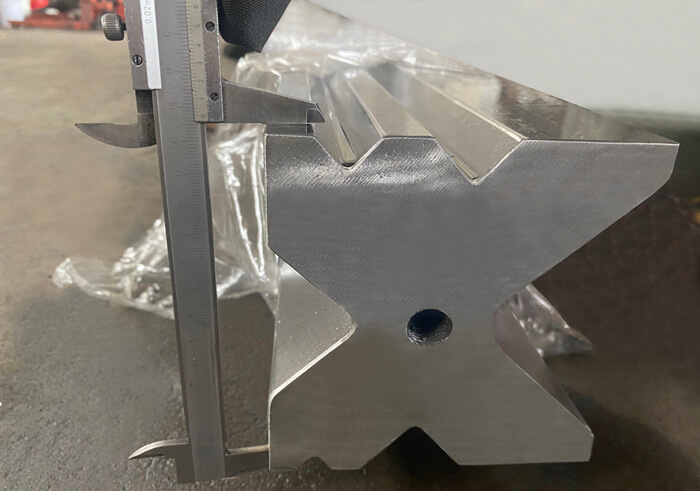
The “Rule of 8” isn’t one-size-fits-all. Different materials have different tensile strengths, which means you need to adjust your tooling.
A. Stainless Steel (The Harder Material)
Stainless steel has high tensile strength and significant “spring-back.”If you use a V-die that is too small, you risk cracking the material or damaging the tool.
- New Formula: V = 10 x T (or even 12 x T)
- Example (2mm Stainless): 2mmx10=20mm Use 20mm V Die
B. Aluminum (The Softer Material)
- Aluminum Soft Grades (e.g., 5052) is soft and can crack if bent too sharply, but it generally requires less force.
Formula: V = 6 x T
Example (2mm Aluminum): 2mmx6=12mm, Use 12mm V die
- Hard/T6 Grades (e.g., 6061-T6): These are prone to cracking. Use 10xT-12xT to to keep the bend radius larger and safer.
3. How V-Opening Affects Internal Bend Radius (The 16% Rule)
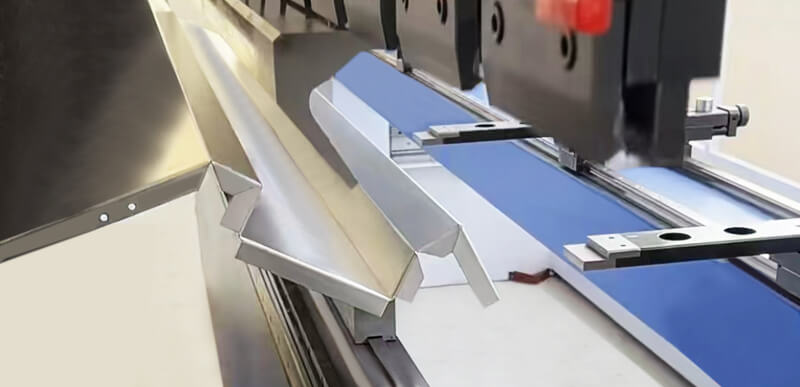
In modern air bending, the punch radius doesn’t determine the bend radius—the V die opening does. The metal “floats” in the die, and the internal radius (iR) forms naturally as a percentage of the V die opening.
- Mild Steel: iR=16% of V
- Stainless Steel: iR=20% of V
- Aluminum: iR=13-15% of V
If you need a larger radius, select a wider V-die; for a tighter radius, select a narrower one.
4. Tonnage and Minimum Flange Considerations
The choice of V-die opening directly impacts the physical limits of your machine.This is the most common mistake operators make. If your V-die is too wide, your sheet metal will fall into the hole instead of bending.You must calculate the Minimum Flange Length (b) to ensure the sheet can sit safely across the V-opening.
- Tonnage: As the V-opening gets smaller, the force (tonnage) required to bend the metal increases exponentially. Doubling the V-opening width reduces the required tonnage by approximately 50%. Please refer to [How to Calculate Required Tonnage].
- Minimum Flange (b): To prevent the sheet from falling into the die during the bend, the flange must be long enough to span the opening. A good rule of thumb is:
Minimum Flange = V-Opening x 0.7
Example: If you are using a V20 die: Calculation: 20mmx0.7=14mm Result: Your flange must be at least 14mm long. If your drawing asks for a 10mm flange, a V20 die will not work. You may need to use a smaller die or change the design
- If your part has a very short flange, you are forced to use a smaller V-die, but you must check that your machine can handle the increased tonnage.
5. V Die Opening Chart for different Materials
Here is a quick cheat sheet for selecting the right press brake tooling based on material thickness.
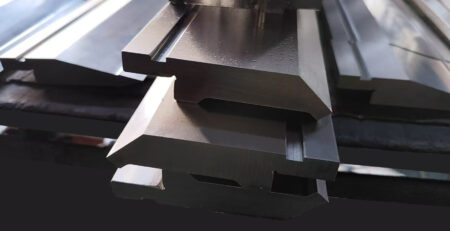
If you are using European style machines, check our compatible Amada Press Brake Tooling dimensions.
| Material Thickness (T) | Mild Steel (V=8T) | Stainless Steel (V=10T) | Aluminum (V=6T) | Min Flange (Approx) |
| 1.0 mm | V8 | V10 | V6 | 5.6 mm (for V8) |
| 2.0 mm | V16 | V20 | V12 | 11.2 mm (for V16) |
| 3.0 mm | V24 | V32 | V18 | 16.8 mm (for V24) |
| 4.0 mm | V32 | V40 | V24 | 22.4 mm (for V32) |
| 6.0 mm | V50 | V63 | V32 | 35.0 mm (for V50) |
Fenquently Asked Questions
Question:What is the formula for calculating V die opening for mild steel?
A:For standard 90-degree air bending of mild steel, a common starting rule is V = 8 × T, where V is the V die opening and T is the material thickness. For example, 2 mm mild steel typically starts with a V16 die.
Question:How do you calculate the minimum flange length for a V die?
A: A practical rule is Minimum Flange = V opening × 0.7. For example, a V20 die needs an approximate minimum flange length of 14 mm so the workpiece can span the die opening during bending.
Question:How does the V opening width affect bending tonnage?
A: A smaller V opening generally requires more bending force, while a wider V opening reduces the required tonnage. In practical press brake work, doubling the V opening can reduce required bending force by approximately half, subject to material and bending conditions.
Common Mistakes in V Die Selection
Conclusion: Using the wrong V die opening leads to inaccurate angles, tool damage, and wasted material. By following these simple formulas, you ensure precise bends and longer tool life.
- Browse our press brake tooling range.→ [ press-brake-tooling]
- See all press brake tool types. → [ press-brake-tools-types]
Do you need a specific V-opening that isn’t standard? We manufacture custom press brake dies and punches to fit any unique bending requirement. Contact our engineering team today for a quote! Sources

Leave a Reply