

What Should Be Done If the Operation of Hydraulic bender is not synchronous?
Troubleshooting Hydraulic Bender Synchronization: A Professional’s Guide to Precision
In the world of precision metal fabrication, a non-synchronous hydraulic bender is more than just a minor inconvenience—it is a threat to your machine’s structural integrity. When the two cylinders of a press brake fail to move in unison, it creates “offset loading.” This uneven pressure can twist the ram, blow out hydraulic seals, and cause permanent damage to expensive Press brake tooling.
If your press brake machine is drifting, stuttering, or producing uneven bend angles, follow this diagnostic guide to restore perfect parallelism.
1. Classify Your Synchronization System
Before troubleshooting, you must identify the “logic” of your machine. The solution for a traditional hydraulic press brake machine is fundamentally different from a modern CNC system.
- Mechanical Torsion Bar: Uses a heavy steel horizontal shaft to physically link the two cylinders.
- Hydraulic Series Circuit: Relies on a “Master-Slave” setup where oil from one cylinder feeds the next.
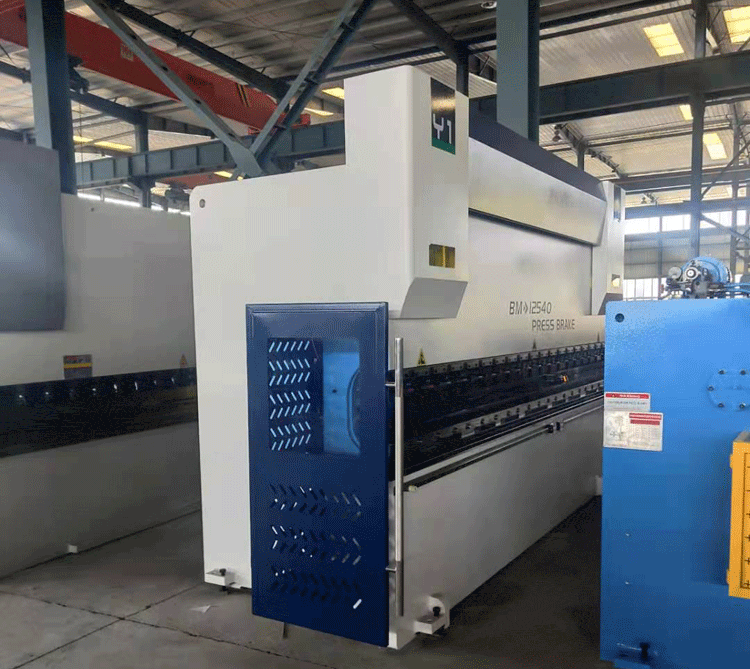
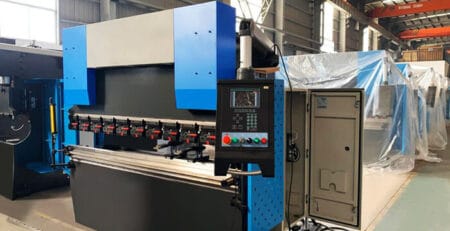
- Electro-Hydraulic bender (CNC): Features independent Y1 and Y2 proportional valves and linear scales that monitor position in real-time.
ensure you have selected the correct press brake tonnage for the material being bent.
2. Top Root Causes and Practical Solutions
A. Trapped Air in the Hydraulic Circuit
Air is the most frequent culprit behind “spongy” or lagging cylinder movement. Unlike hydraulic oil, air is highly compressible. Even a tiny pocket of air in one line will cause that cylinder to react slower than its partner.
- The Fix: Perform a System Purge. Raise the ram to its maximum height, slightly loosen the bleed screws on the cylinder heads, and cycle the machine at low pressure. Continue until the oil escaping is clear and free of foam or bubbles.
B. Internal Cylinder “Bypass” (Seal Degradation)
If the internal U-cups or piston seals are worn, high-pressure oil “leaks” past the piston head into the return side. This results in a loss of effective tonnage and speed on one side of the machine.
The Fix: Execute a Drift Test. Stop the ram mid-stroke and kill the power. If one side sinks while the other stays locked, your internal seals have failed and require immediate replacement.
C. Mechanical Binding and Gib Clearance
Over time, guide rails (gibs) can become dry or clogged with metal dust and scale. If the left side has more friction, the hydraulic system will naturally send more oil to the “easier” right side, causing an immediate tilt.
- The Fix: Clean the guide ways thoroughly and apply fresh lubricant. Use a feeler gauge to check the Gib Clearance—for most industrial benders, this should be between 0.05mm and 0.10mm.
3. Troubleshooting CNC & Electro-Hydraulic benders
If you are operating a high-end CNC machine, the problem is often electronic feedback rather than physical oil flow.
- Linear Scale Maintenance: The optical “eyes” (scales) on the side of the machine are sensitive. If they are dirty or the mounting brackets are loose, the CNC receives “junk” data. Clean these with specialized alcohol and ensure they are vibration-free.
- Proportional Valve Scaling: Over years of operation, the voltage required to open a valve can drift. Use your CNC diagnostic screen to verify that both Y1 and Y2 valves are receiving balanced command signals.
- Oil Temperature Stability: Cold oil is more viscous (thicker). If your machine only stays out of sync for the first 30 minutes of the shift, you must implement a 15-minute Warm-Up Cycle to stabilize oil temperature before production starts.
4. Preventative Maintenance Checklist
To ensure long-term accuracy and avoid costly downtime, follow this schedule:
- Weekly: Inspect the torsion bar bushings for any “play” or looseness.
- Monthly: Verify that the machine bed is level using a precision spirit level across the entire length.
- Annually: Conduct a hydraulic oil analysis. Contaminated oil is the primary cause of proportional valve failure and seal erosion.


Leave a Reply