

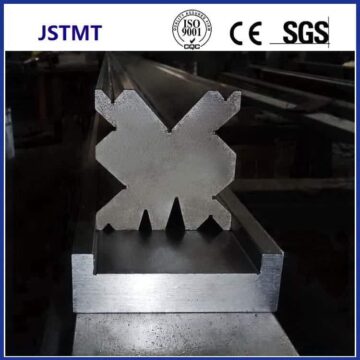

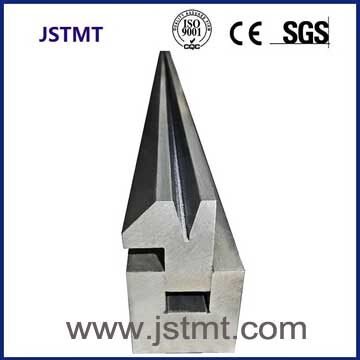

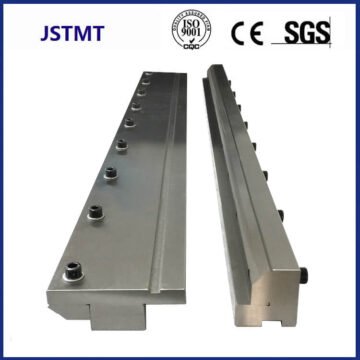


Bending Applications & Recommended JSTMT Tooling Solutions
Widely used across electrical cabinets, HVAC ductwork, elevator panels, automotive, and aerospace fabrication, JSTMT matches specific sheet metal forming challenges with precision-engineered tooling:
| Bending Application / Workpiece Feature | Recommended JSTMT Tooling | Core Technical Advantage |
|---|---|---|
| Deep Box, Return Flanges & U-Channels | Gooseneck Punches | Provides extra clearance to prevent workpiece collision during the final bend of deep boxes and complex return flanges. |
| Acute Angles & High-Springback Metals | Acute Punches (30° / 85°) | Overcomes material springback in stainless steel and high-strength steel (HSS) to ensure exact final bend angles. |
| Complex Z-Profiles & Flattening | Offset & Hemming Dies | Enables dual-stage forming or single-hit flattening, cutting cycle times for high-volume sheet metal production. |
| Large-Radius Arcs & Heavy-Duty Loads | Radius Dies & 42CrMo Multi-V Dies | Delivers smooth large-radius forming for aerospace and heavy machinery while preventing plate cracking under high tonnage. |
Need assistance selecting the correct tonnage or tooling types? JSTMT engineering specialists can recommend suitable press brake tooling solutions for your production requirements.
Technical Specifications of Press Brake Tooling
JSTMT press brake tooling is manufactured from high-strength alloy tool steel and CNC precision ground for accurate sheet metal bending.
| Specification | Details |
|---|---|
| Tooling Material | Certified 42CrMo (AISI 4140) alloy steel, T8 steel, or customized tool steel |
| Hardness | HRC 48±2 full-length induction or laser hardening, with optional surface treatment |
| Precision Tolerance | ±0.01mm CNC precision-ground profiles for seamless segmented alignment and angle accuracy |
| Tool Length | Standard segmented lengths (835 mm, 415 mm), full-length, or custom lengths |
| Tooling Types | Standard punches, gooseneck punches, acute punches, multi-V dies, hemming tools, radius tools, offset dies, and custom forming tools |
| Compatible Systems | Amada, Trumpf, Wila (New Standard), LVD, Bystronic, European style, and American style press brakes |
| Applications | Sheet metal air bending, flanging, hemming, deep box/channel forming, offset bending, and custom profile forming |
These technical specifications help sheet metal fabricators select the exact press brake tooling based on plate thickness, bending angle, required radius, machine clamping compatibility, and production volume.
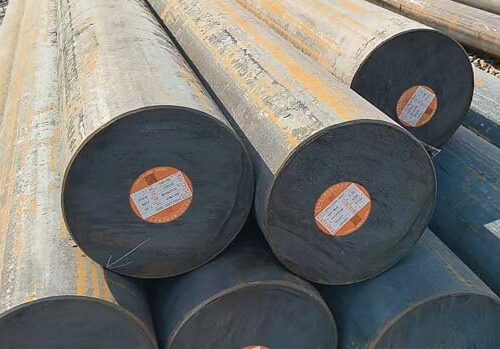
Closed-Loop 42CrMo Manufacturing & Heat Treatment Standards
JSTMT manufactures press brake tooling using advanced CNC machining, precision grinding, and heat treatment processes to ensure consistent quality, dimensional accuracy, and long service life.
-
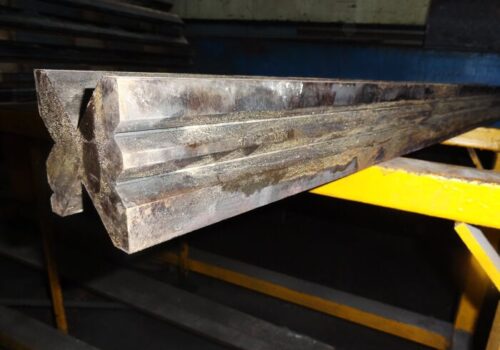
High-Grade Raw Material: 42CrMo (AISI 4140) Alloy Steel
Quenched and tempered for superior core strength and structural stability to withstand extreme bending tonnages.
-
CNC Milling & Machining
High-speed CNC centers ensure precise geometric shaping for complex tooling profiles.
-
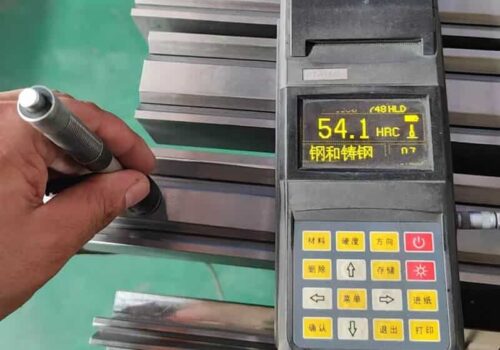
Heat Treatment & Hardening(HRC 48±2)
Deep-layer induction or laser hardening (HRC 48±2) for maximum wear resistance on working edges.
-
Precision Grinding(±0.01mm)
Advanced CNC grinding achieving a tolerance of ±0.01mm, ensuring perfect tool alignment and angle accuracy.
-
Hardness & Quality Testing
100% dimensional verification and hardness testing to guarantee consistent industrial performance.
Why High-Quality Press Brake Tooling Matters
High-quality press brake tooling helps manufacturers improve bending accuracy, reduce setup time, extend tool life, and maintain consistent results across different sheet metal production runs.
Custom Press Brake Tooling Solutions
JSTMT manufactures custom press brake punches and dies based on your drawings, machine specifications, and bending requirements. We support standard and special tooling for a wide range of applications.
Custom Capacity
How to Choose the Right Press Brake Tooling
Choose press brake tooling based on the sheet material, material thickness, bend angle, inside radius, flange length, machine tonnage, clamping system, and production volume. V-dies and standard punches are used for general bending, while gooseneck punches, hemming tools, offset dies, and joggle tools are selected for more specific forming needs.
Segmented Press Brake Tooling:
available in 415 mm and 835 mm segment tooling for flexible tooling setup.

Technical Resources & Tooling Excellence
Selecting the right press brake tooling is essential for achieving accurate bending results and extending tool life. Our engineering team provides practical technical resources to support daily production and tooling selection.
- Press Brake Tooling Classification – Overview of punch and die types such as gooseneck, acute, and offset tooling for different bending applications.
-
How to Calculate V-Die Opening – Helps operators select the correct V-die opening based on material thickness and bending requirements.
-
Air Bending vs. Bottoming – Comparison of air bending and bottoming, including their effects on tonnage and angle accuracy.
- How to Choose Press Brake Tooling - Guide to choose Press Brake Tooling.
- 5 Common Bending Defects – Practical solutions for defects such as springback, cracking, and surface marking..
-
Press Brake Tooling Material Overview – Introduction to high-strength tool steels such as 42CrMo and T8 for durability and wear resistance.
- Tooling Compatibility Guide: European, American vs. Wila (New Standard)- Learn about tang dimensions, clamping system for proper machine matching.
FAQ- Engineering Quick Answers
Press brake tooling refers to the punches and dies installed on a press brake to bend sheet metal into accurate angles, flanges, channels, hems, offsets, and custom profiles. The punch applies force from above while the die supports the sheet metal below, allowing the material to form along the required bend line. Common press brake tooling includes standard punches, gooseneck punches, V-dies, hemming tools, radius tools, offset dies, and segmented tooling for different bending applications.
Choosing the right tooling depends on the material thickness, bend angle, inside radius, flange length, machine clamping system, and production volume.
Check the punch shank profile, die holder, and clamping system. Common press brake tooling standards include Amada/European, Trumpf, Wila, LVD, and Bystronic. If you are unsure, send us a photo of your tooling or clamping system, and our engineers can help confirm the correct tooling interface before quotation.
Yes. We supply segmented press brake tooling in common lengths such as 835 mm, 415 mm, and other sectionalized sizes. Segmented tooling helps reduce changeover time, supports flexible bending lengths, and makes it easier to form small batches or parts with different flange positions. Send us your required bending length, machine model, and tooling style, and we can recommend a suitable segmentation plan.
JSTMT commonly uses Certified 42CrMo alloy steel (compliant with GB/T 3077, equivalent to AISI 4140) for press brake punches and dies. All tooling is processed with quenching and tempering Heat Treatment & Hardening(HRC 48±2) and Precision Grinding(±0.01mm) to optimize core toughness, strength, and wear resistance for long service life. For special bending applications, we can also recommend suitable tool steel selection, hardness levels, and surface treatments based on your sheet material type, thickness, and production volume.
Yes. Our premium press brake punches and dies are precision ground to achieve tight dimensional tolerance of ±0.01mm, accurate tool alignment, consistent bending angles, and reliable interchangeability between tool segments. For projects that require critical accuracy, please send your drawing, tolerance requirements, tooling length, and machine system so we can confirm the suitable manufacturing process.
To select the correct press brake tooling, consider the sheet material, material thickness, bend angle, inside radius, flange length, press brake tonnage, tooling clamping system, and production volume. For general air bending, V-dies and standard punches are commonly used. For deep boxes or return flanges, gooseneck punches provide better clearance. For flattening edges, hemming tools are required. For stepped profiles or overlapping joints, offset dies or joggle tools are more suitable.
Please provide tooling drawings, bending profiles, machine brand, material type, and any special requirements. or Contact our technical team today for a tailored solution.
- Press brake brand, model, and clamping system,or Tool Holder Type
- 2D/3D drawing, sample photo, or existing tool profile
- Forming profile, Tooling length, such Flange length, offset height
- Sheet material and material thickness
- Segmentation requirements, or Estimated production volume and accuracy requirements