

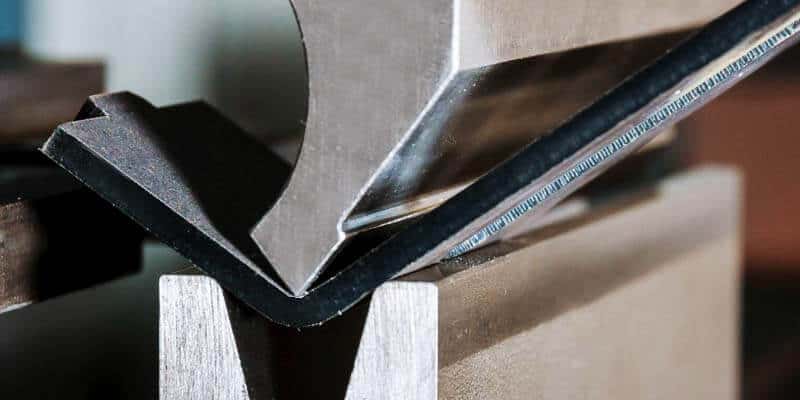
5 Common Bending Defects and How Custom Tooling Solves Them
5 Common Bending Defects and How Custom Tooling Solves Them
Sheet Metalworking is most widely used in sheet metal fabrication, a single degree of error or a tiny surface crack can turn an expensive workpiece into scrap. While many Press brake operators blame the machine or the material, the root cause is often “standard” press brake tooling being pushed beyond its limits.Many defects are caused by worn-out dies. Replacing your Press Brake Tooling is often cheaper than scrapping parts.
When standard dies fail to provide the accuracy required for complex geometries or sensitive materials, custom tooling becomes the ultimate solution.
Here are the five most common bending defects and how specialized tooling solves them.
1. Springback Inconsistency
The Bending Defects: After the punch is released, the metal naturally tries to return to its original shape, causing the bend angle to open up. This is especially problematic in high-tensile materials or 304 Stainless. Standard 88° or 90° dies often don’t provide enough overbend to compensate for the material’s memory.
- Production Line :Operators spend hours “bumping” parts or adjusting machine parameters for every single bend.
- The Custom Solution: Custom tooling allows for over-bending compensation. We engineer dies with specialized overbend angles (e.g., 75° or 80°) and custom V-openings matched to your specific material’s K-factor. This allows the material to be pushed past its limit so it settles exactly at the required angle accuracy every time.By designing a die with a specific “offset” angle or a specialized V-opening tailored to your material’s unique K-factor, custom dies ensure the final part hits the exact degree required every time. Read more: How Material Choice Impacts Bending Precision
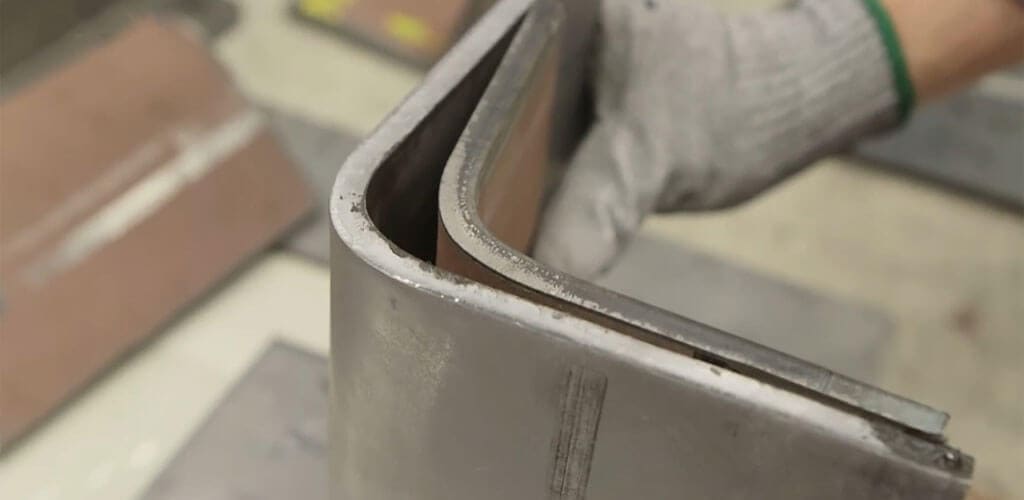
2. Surface Marking and Galling
The Bending Defects: Standard steel dies often leave unsightly “drag marks” or scratches on the outside of the bend. For architectural parts or polished electronics, this often results in rejected batches.
- Production Line: It will lead to Higher labor costs and rejected batches due to cosmetic failures.
- The Custom Solution: Custom dies can be manufactured with Non-Marking Inserts (such as specialized nylon or urethane) or designed as Wing-Bend dies. These none-marking tools support the material throughout the bend movement, eliminating the friction that causes marking.
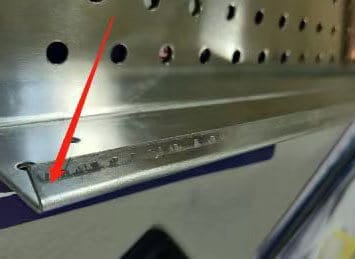
3. Sheet Metal Cracking at the Bend Line
Bending Defects: If the punch radius is too sharp for the material thickness, the outer grain of the metal will stretch beyond its limit and crack.
- Production Line:Structural integrity is compromised, leading to parts that fail in the field.
- The Custom Solution: Standard tool catalogs have limited radii. A custom-designed punch can be engineered with a specific large-radius tip that perfectly matches the ductility of your specific alloy. This distributes the stress evenly and preserves the structural integrity of the part.
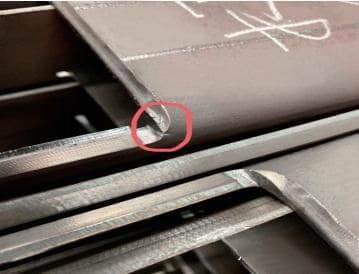
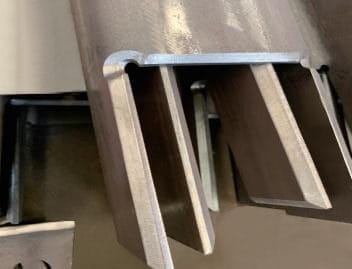
4. Inaccurate Flange Lengths (Hole Deformation)
The bending Defects: When a bend is located too close to a pre-punched hole, the hole will “stretch” into an oval shape during the bending process.
- Productioe Line:Holes have to be re-drilled or parts are scrapped because hardware won’t fit.
- The Custom Solution: We design Custom Relief Dies. These tools feature a cutout or a specialized rotating support that allows the material to bend without pulling on the nearby hole, maintaining the hole’s circularity and in the right position.
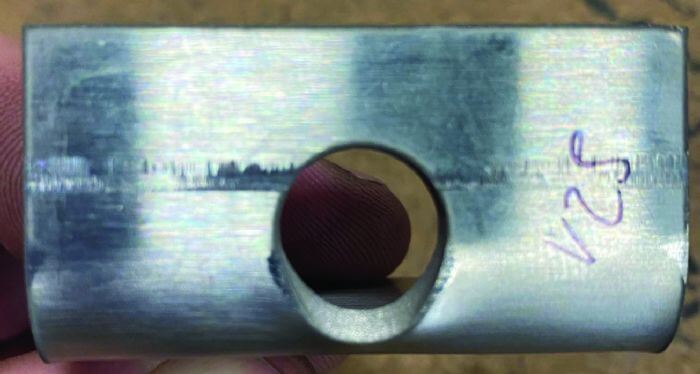
5. Bowing and Flange Inaccuracy on Long Parts
The bending Defects:When bending parts over 3 or 4 meters, the center of the flange often bows (the “oil canning” effect). This is usually caused by the natural deflection of the press brake beam and uneven pressure distribution
- Production Line : Long parts won’t fit into the final assembly without being forced or shimmed.
- The Custom Solution: Custom Crowning Tooling. By engineering a slight “belly” or compensating curve into the die itself needs a specialized “belly” or geometric compensation. We build this accuracy into the tool so that you get a perfectly straight flange across the entire length of the workpiece.
Conclusion: Why Custom Tooling is an Investment, Not an Expense
Reducing scrap rates by even 5% can pay for a custom tool in just a few months. By addressing specific bending defects at the source, you reduce secondary finishing costs and increase your production speed.
For vintage French machines, worn-out dies are common. We supply direct replacement Colly Press Brake Tooling to restore factory accuracy. Inconsistent angles often require specialized punches. Browse our Amada Press Brake Tooling catalog for acute and gooseneck profiles.
At JSTMT, we specialize in engineering the “impossible” bends. Whether you are struggling with the bending springback or surface marks, our team can design the exact tool your project needs.

Leave a Reply