

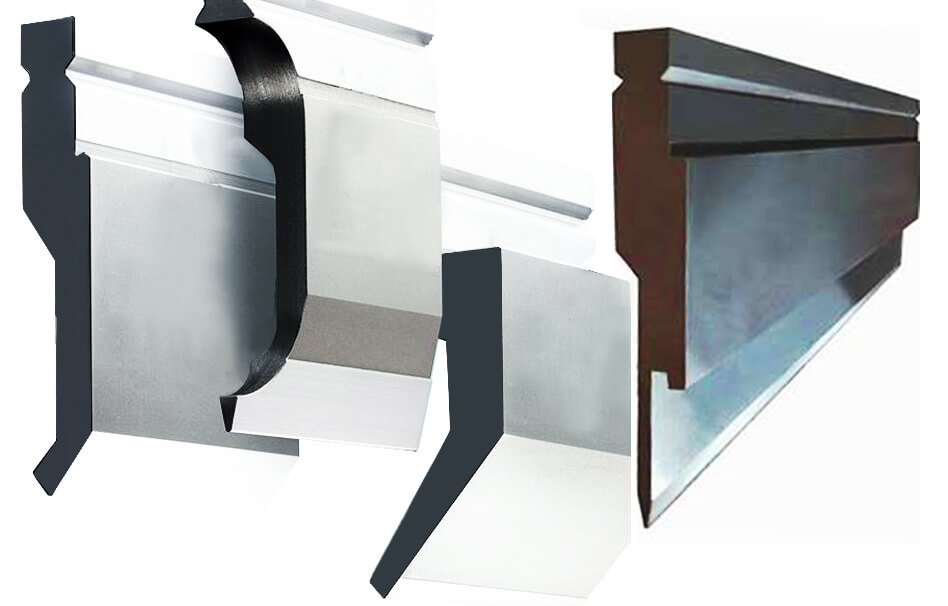
Press Brake Tooling Styles: European, American vs. Wila (New Standard)
The Professional’s Guide to Press Brake Tooling Styles: European vs. American vs. Wila
In precision metal fabrication, the compatibility between your machine and your tooling system determines your competitive edge. Mismatching these systems leads to inconsistent angles and accelerated wear on worn components. Below is the authority breakdown of the three dominant standards used in modern industrial sectors, including the Australian and UAE markets.
At JSTMT, we see many workshop managers struggling with the “legacy vs. modern” tooling dilemma. Whether you are running a classic Amada, a heavy-duty Accurpress, or a high-speed Trumpf, understanding the nuances of the European, American, and Wila standards is the first step to optimizing your press brake’s ROI.
1. European Style (The Amada / Promecam Style)
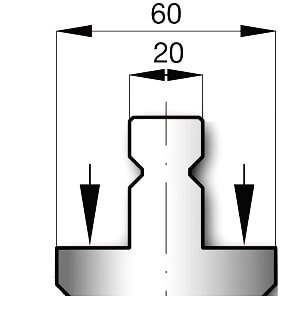
The European style is arguably the most versatile and widely adopted system globally. Originally pioneered by Promecam and later Amada style.
- The Tang Design : The defining feature is the 20mm x 7mm tang with a safety groove( safety ear).
- Clamping Mechanism: These tools are highly compatible with a variety of clamping systems typically held by manual or pneumatic plates that apply pressure to the side of the tang.
- Hydraulic Integration: If the clamping bar is not perfectly parallel, it can trigger hydraulic issues where the press brake ram exerts uneven force, leading to a tilted profile during the return stroke.
- The Advantage: General job shops requiring frequent tool changes and a wide variety of die openings. Because of its popularity, the variety of “off-the-shelf” shapes—from deep goosenecks to acute punches—is unparalleled.
- Best For: Operators who need to switch between many different bending profiles quickly without a massive investment in custom holders.
2. American Style (Imperial Style/The Heavy-Duty Workhorse)
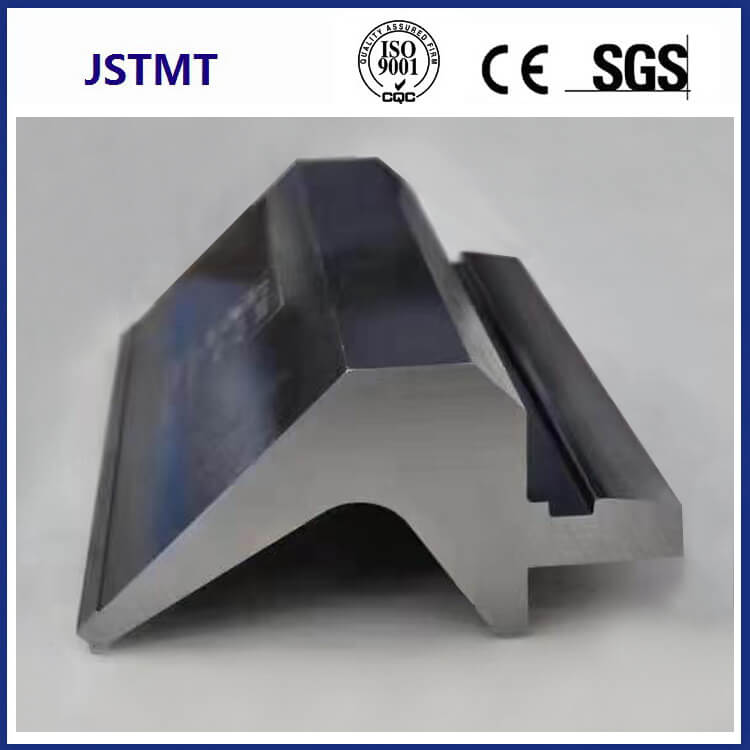
Commonly used in traditional North American workshops on machines like Cincinnati, Accurpress, and Niagara, the American style is built for robustness. This “Imperial” style is known for its robust, simplified tang.
- Design & Clamping: It features a centered, rectangular tang measuring 0.500″ x 0.625″ (12.7mm x 15.8mm).
- The Key Difference: Unlike European tools, American style tools are usually centered directly under the ram. This “centered-load” design is exceptionally stable for high-tonnage, heavy-plate bending.
- The Challenge: American style tools often have a larger “shut height” requirement. If you are trying to adapt these to a European machine, you must carefully calculate your stroke and open height.
- The “Inconsistent Angle” Risk: Because it relies on manual tightening, it is difficult to maintain proper pressure across a 4000mm bed. If one screw is tighter than the next, the bend angle will drift.
- Maintenance Note: Operators must frequently inspect for worn components on the tang surfaces, as manual friction can cause the punch to “seat” poorly over time.
3. Wila Style (The “New Standard” of High Precision)
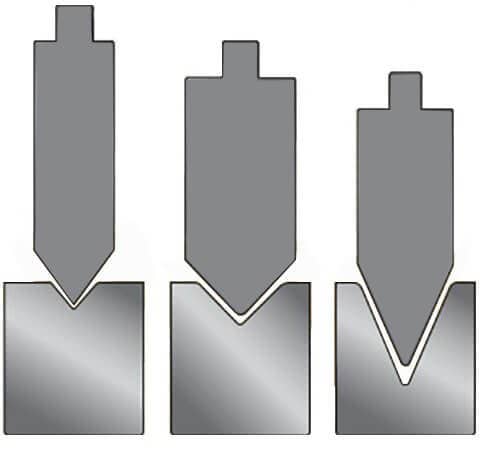
Wila (often referred to as New Standard or Trumpf Style) represents the pinnacle of modern bending technology. It is designed for CNC-driven, high-accuracy environments.
- The Self-Aligning Technical: Wila-style tools use a proprietary notched tang that allows for Self-Seating and Self-Aligning. It feature a “Self-Seating” mechanism that pulls the tool into the holder automatically, ensuring zero play.
- The “Safety Click” Innovation: One of the most significant advantages of Wila punches is the Safety Click. This allows the operator to load the tool vertically by snapping it into the clamp from below, rather than sliding it in from the side—a massive time-saver for long machines.
- Precision and Hardening: At JSTMT, our Wila-style tools are CNC-ground to +/- 0.01mm and hardened using deep-case technology (55-60 HRC), ensuring the tool’s tip maintains its radius even after thousands of cycles in stainless steel. It means they are far less become worn components compared to standard induction-hardened tools, preserving the tooling condition for millions of cycles.
- Best For: High-end fabrication requiring extreme repeatability and automated clamping systems.
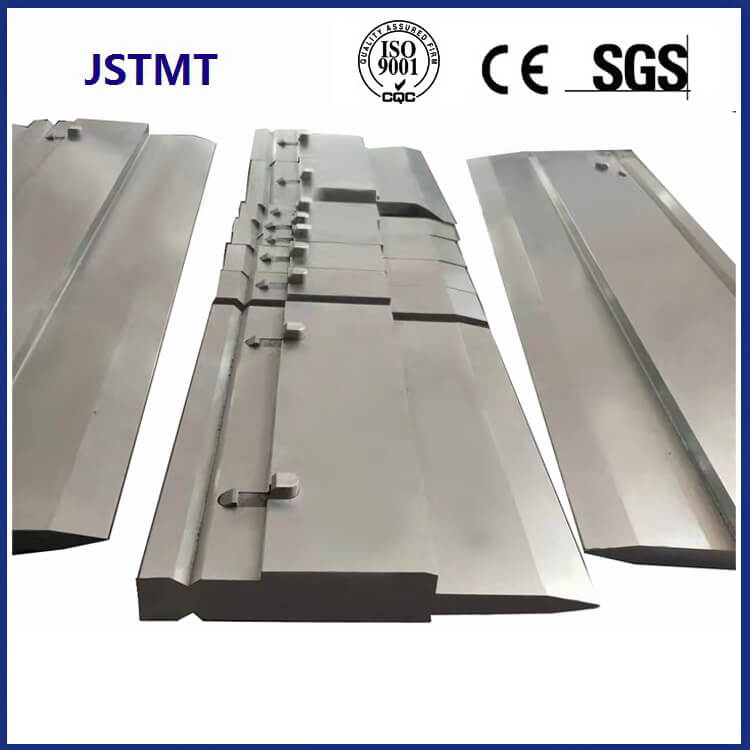
Technical Performance Comparison: Tang & Interface Specs
| Feature | European Style | American Style | Wila (New Standard) |
| Tang Dimensions | 20.0mm x 7.0mm | 12.7mm x 15.8mm | Proprietary Notched |
| Clamping Style | Manual / Hydraulic | Manual Set Screws | Automatic / Hydraulic |
| Loading Method | Side Loading (mostly) | Side Loading | Vertical “Click” Loading |
| Setup Speed | Moderate | Slow | Ultra-Fast |
| Alignment | Manual Centering | Operator Dependent | Self-Aligning |
| Typical Hardness | 45 – 52 HRC | 45 – 52 HRC | 55 – 60 HRC (Premium) |
| Accuracy Level | High | Standard | Ultra-High |
Technical Troubleshooting: Transitioning Between Styles: Can You Mix?
If you attempt to use an American-style punch in a European-style holder without a high-quality adapter, you will face significant hydraulic issues. The control valve will struggle to maintain consistent pressure because the tool is not seated correctly, leading to a shuddering return stroke.
Can you run Wila tools on an American machine? Yes, with adapters.
However, as experts in the field, we advise caution. Adapters add to your “stack height,” reducing the available space for deep-box bending. If you are considering a transition, consult with a JSTMT engineer to verify your machine’s Open Height and Stroke specifications.
To maintain proper longevity of your JSTMT machinery, always verify:
- Tonnage Limits: Ensure the tool’s load capacity exceeds the machine’s maximum pressure for the intended bend angle.
- Safety Tangs: Always use safety-click or safety-groove tools to prevent the punch from falling during the return stroke.
- Oil Temperature: Remember that overheating can affect the clamping force of hydraulic holders. Keep the oil below 60°C to ensure the tooling condition remains stable.
JSTMT: Why Material Matters to Match your System (42CrMo)
Many press brake manufacturers use #45 Carbon Steel or T8 Steel, These two materials appear visually identical, but under high-tonnage pressure, their tips may “soften” or deform.
The 42CrMo Advantage in Engineering
Choosing 42CrMo over standard carbon steel addresses the root cause of many common hydraulic issues and mechanical failures:
- Resistance to Deformation: 42CrMo handles high-tonnage loads without the tip deformation that causes inconsistent angles.
- Surface Hardness: Full-length induction hardening protects against worn components, ensuring the tool remains a reliable asset rather than a consumable.
- Operational Stability: High-grade material ensures a smooth return stroke by preventing tool binding or friction-induced heat expansion.
How to Identify Your Tooling Style?
If you are unsure which system your machine currently uses, you don’t need to guess. Take a digital caliper and measure these three critical dimensions to maintain proper compatibility:
- Tang Width: Is it 20mm (typically European/Amada) or 12.7mm (0.5″) (American Imperial)?
- Tang Height: Measure from the shoulder to the top of the tang. European tangs are usually taller to accommodate safety grooves, while American styles are shorter.
- Clamping Groove: Does it have a safety slot for a hook, or is it a flat bar? European tools often feature a safety click or groove to prevent the punch from falling during the return stroke, whereas American tools may rely on a simple flat surface for set-screw clamping.
Conclusion
Choosing between European, American, and New Standard isn’t just about the machine you own today—it’s about the production speed and precision you want for tomorrow.Whether you are troubleshooting a sticking control valve or replacing worn components to fix inconsistent angles, your tooling choice is the most critical factor.
Are you looking to upgrade your tooling library?
At JSTMT, we specialize in high-grade 42CrMo tools across all three standards, ensuring localized expertise for markets like Australia and the UAE.
[Download our Full Tooling Catalog] or contact our engineers with your machine model for a compatibility check.
📚 Recommended Technical Resources
If you found this guide helpful related to press brake tooling styles, you might also be interested in our deep dives into press brake precision and maintenance:
-
[The Ultimate Press Brake Tooling Buying Guide] – A comprehensive checklist for sourcing high-performance tools.
-
[Why 42CrMo is the Gold Standard for Tooling] – Understand the metallurgy behind long-lasting bending precision.
-
Practical Tooling: How to Calculate V-Die Opening – A must-read for daily operations. Learn the precise formula for selecting the correct V-die width based on your sheet metal thickness.

Leave a Reply